Archives
-
ART FRONTIER
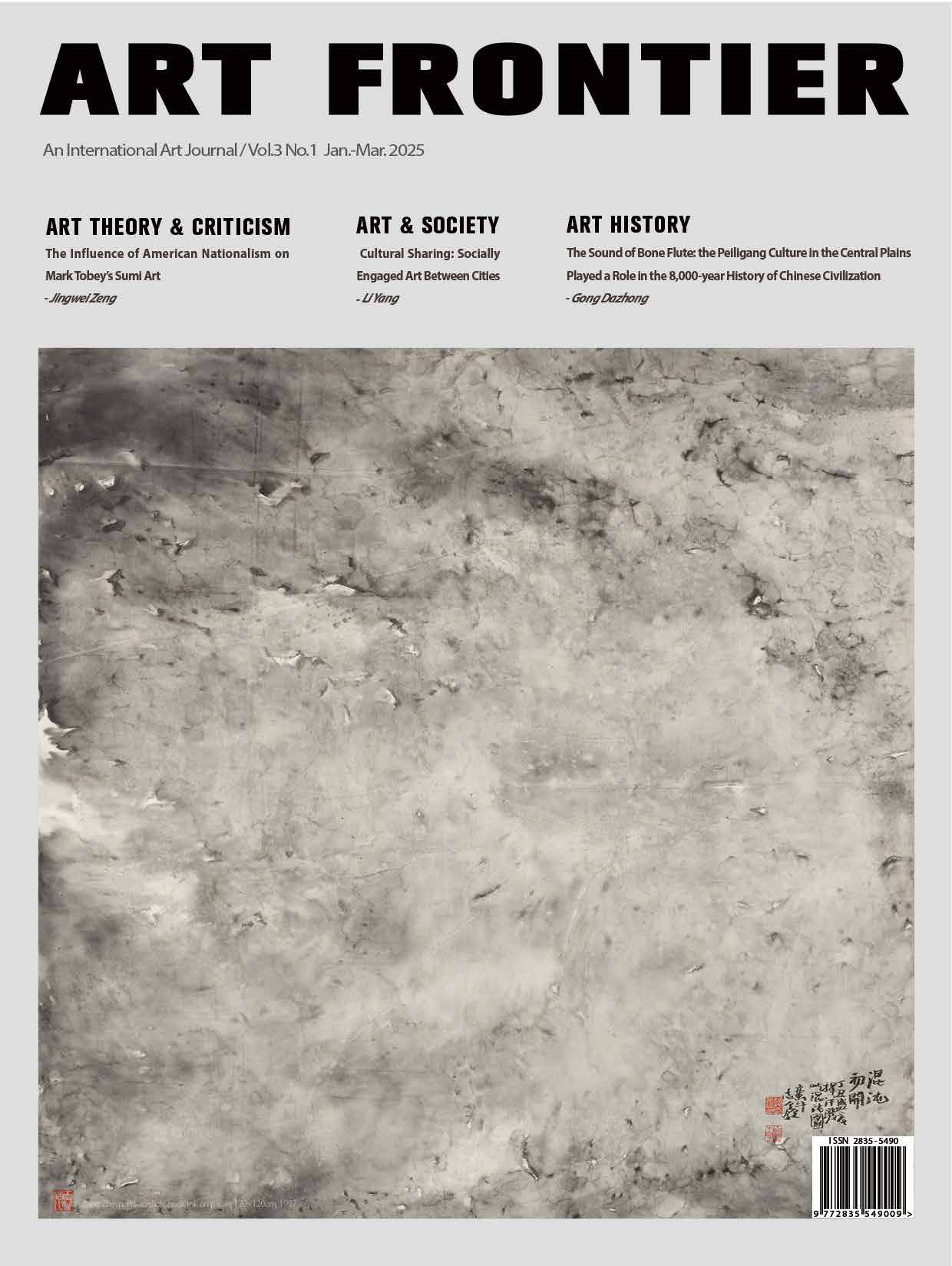
Vol. 3 No. 1 (2025)Art Frontier Vol. 3, No. 1 presents a rich interdisciplinary exploration of art across theory, society, and history. This issue features Jingwei Zeng’s examination of American nationalism’s influence on Mark Tobey’s sumi art, and Jin Mei’s study on abstraction in contemporary creation. Li Yang investigates socially engaged art bridging urban-rural divides, while Fengyi Jiang addresses ethics in war photojournalism. Historical contributions include Gong Dazhong’s analysis of the Peiligang Culture’s role in extending Chinese civilization to 8,000 years. Dong Rui explores female iconography on Eastern Wei funerary beds. Other topics range from mosaic painting to gamified location-based entertainment and etc. . Committed to open access and rigorous peer review, Art Frontier continues to advance global dialogue on East Asian and world art.
-
ART FRONTIER
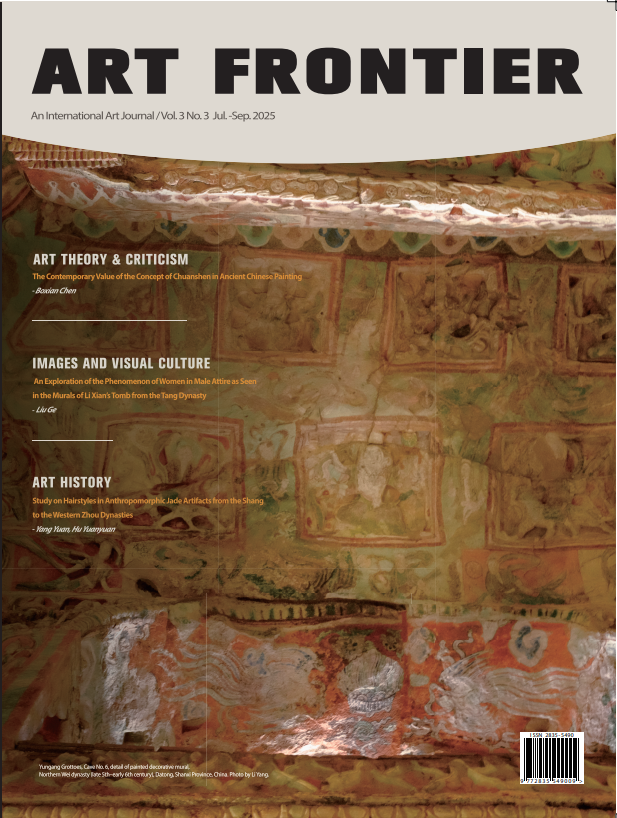
Vol. 3 No. 3 (2025)This issue of Art Frontier presents a rich interdisciplinary exploration of Chinese art history, visual culture, and aesthetic theory, spanning from ancient jades to contemporary digital media. The ART THEORY & CRITICISM section features incisive analyses of twentieth-century art reform—examining Xu Beihong's "Fusion Theory" and Lin Fengmian's "Harmonization Theory" through the lens of the classical aesthetic category Yi—alongside studies on the contemporary relevance of Chuanshen (Shen-conveying) in ancient Chinese painting, the generative aesthetics of Wang Wei and Shitao, and Josef Albers's enduring pedagogical legacy. The IMAGES AND VISUAL CULTURE section delves into Tang dynasty mural iconography, Ming dynasty coffin paintings, and the evolving aesthetics of vampires in Western film. The ART HISTORY section offers nuanced investigations of Shang-Zhou jade hairstyles, Northern Song Ru ware's Confucian-Daoist complementarity, Ming literati four-season flower handscrolls as vehicles of emotion and social exchange, and Wen Zhengming's Huxi Thatched Cottageas a paradigm of self-object harmony. Together, these eleven articles illuminate the dynamic interplay between tradition and modernity, East and West, and material practice and spiritual transcendence across two millennia of visual culture.
-
ART FRONTIER
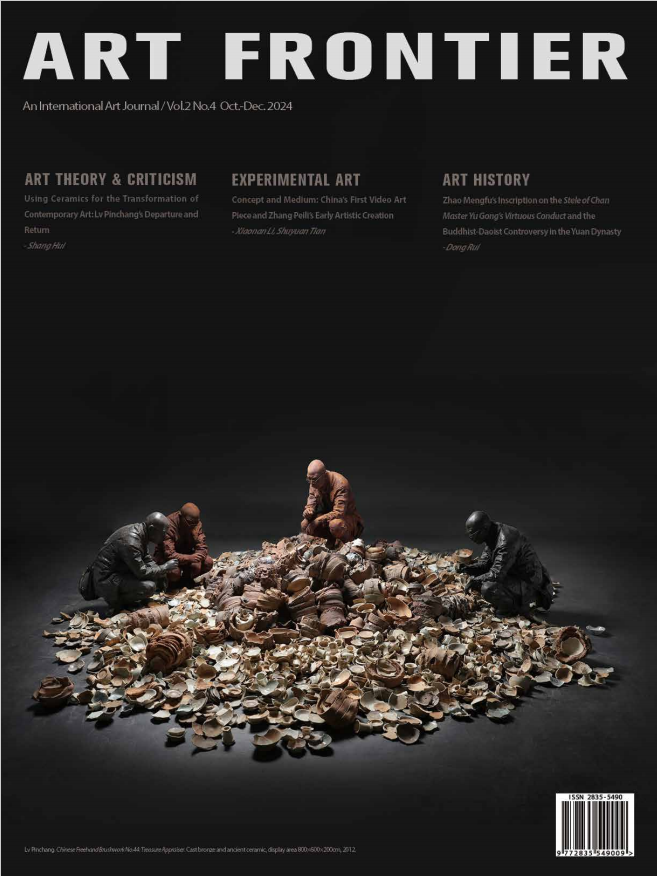
Vol. 2 No. 4 (2024)This issue presents insightful studies that span the fields of Buddhist art, painting theory, calligraphy, sculpture, video art, virtual reality, and art education. Guo Ziyuan traces the iconographic evolution of Tang Dynasty jiyue ren at Longmen Grottoes, while Hao Wenjie and Xie Dunru reinterpret Shen Zongqian's "creating truth" through an ecological aesthetic lens. Dong Rui investigates Zhao Mengfu's stele inscription in relation to Yuan Dynasty Buddhist-Daoist debates. Xiaohe Shi and Jingwei Zeng offer a comparative analysis of art history education paradigms in China and the United States, and Gu Zimo explores the aesthetic concept of "unintentional contemplation" in folk art. Li Yi presents creative notes on cliff inscriptions, while other contributors examine topics ranging from Tang Dynasty female figurine costumes and Song Dynasty infant play motifs to Hong Ren's Buddhist-inspired landscape album and the philosophical foundations of Chinese video art. Together, these articles reflect the breadth and depth of contemporary art historical research.
-
ART FRONTIER
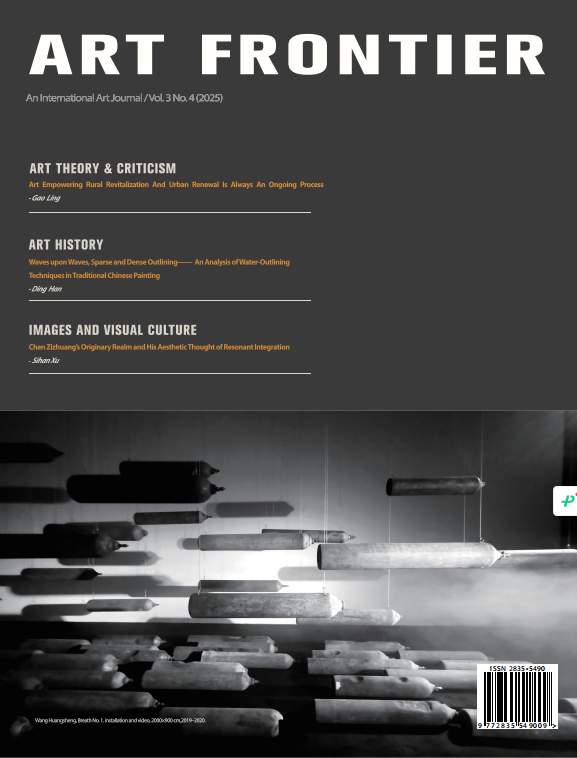
Vol. 3 No. 4 (2025)This issue articles spanning traditional painting techniques, modern ink art, art education, and cross-cultural aesthetics. Ding Han systematically analyzes six principal water-outlining patterns in Chinese painting, tracing their evolution from stylized forms to naturalistic expression. Kong Dexiao and Lu Yuchen reconsider Huang Binhong's landscapes through Heidegger's concepts of world and earth. Xu Sihan explores Chen Zizhuang's aesthetic thought rooted in Daoist and Confucian philosophy. Additional contributions examine art's role in rural revitalization through Wang Wanbin's practice and contemporary ceramic art's transformative potential. Together, these articles reflect the field's methodological diversity and sustained engagement with both tradition and modernity.
-
ART FRONTIER
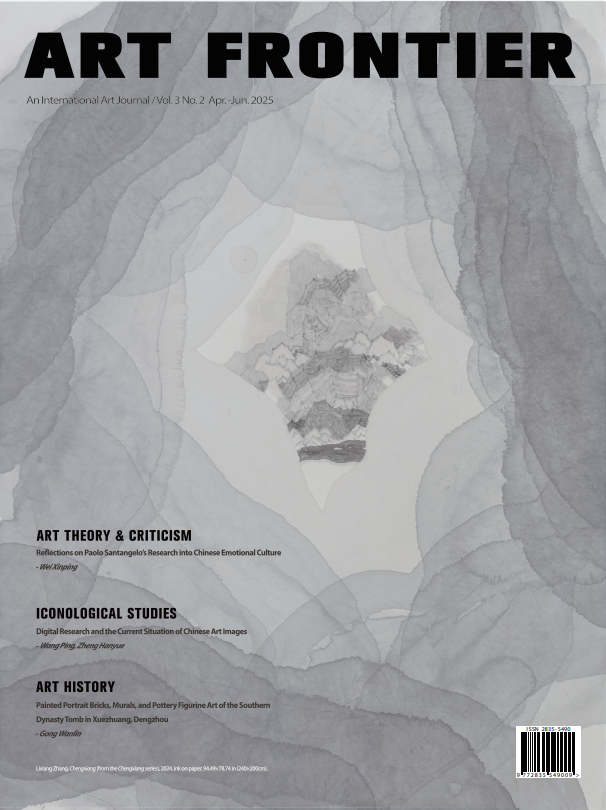
Vol. 3 No. 2 (2025)This issue presents a diverse selection of peer-reviewed scholarship across three sections. The Art Theory & Criticism section explores Chinese emotional culture, cross-cultural painting, aesthetic resonance, and modern artistic thought. Iconological Studies examine the localization of iconology in Chinese art history and digital research on Chinese art images. The Art History section covers Southern Dynasty tomb art, Chinese landscape painting, Impressionist oil painting, and art sponsorship networks in Southern Fujian.
-
ART FRONTIER
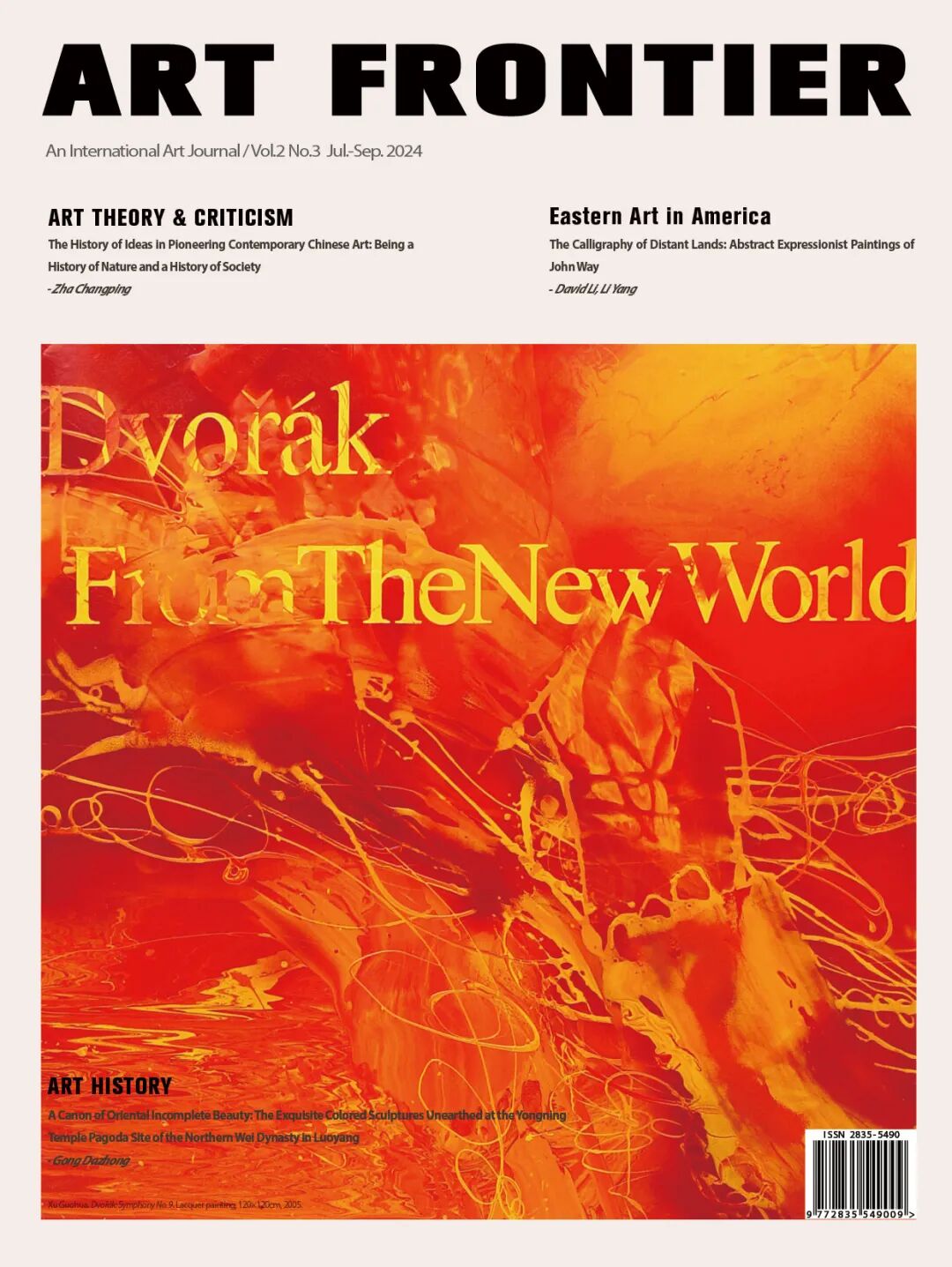
Vol. 2 No. 3 (2024)This issue explores diverse perspectives in art history, theory, and criticism, with particular attention to the dialogue between Eastern and Western artistic traditions. It examines the transformation of artistic language, visual forms, and aesthetic concepts across different historical and cultural contexts, while considering the relationships among art, society, nature, identity, and globalization. Several studies investigate the evolution of painting, sculpture, calligraphy, composition, and artistic expression, highlighting processes of cultural exchange, adaptation, and reinterpretation. Contemporary art is discussed through broader questions of social change, ecological awareness, historical memory, relational aesthetics, and the impact of digital technologies on visual culture. Together, these studies demonstrate how artistic practices both respond to changing cultural conditions and contribute to new understandings of history, society, and human experience. The issue emphasizes interdisciplinary approaches and the continuing interaction between tradition, modernity, and contemporary artistic thought.
-
ART FRONTIER
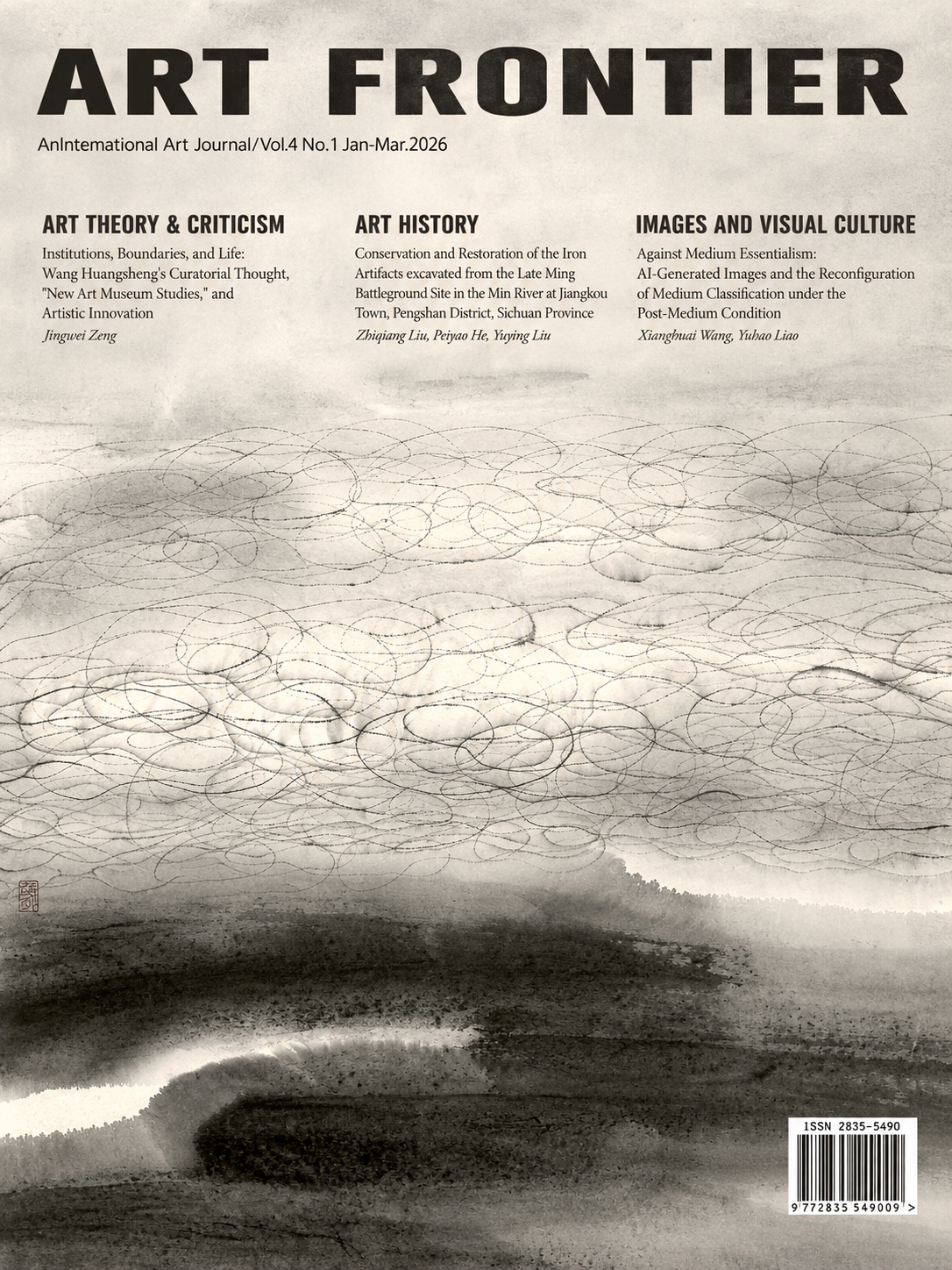
Vol. 4 No. 1 (2026)This issue explores the methodological challenges and creative possibilities that emerge when art historical inquiry crosses cultural boundaries. From the reception of Western theoretical models in non-Western contexts to the reinterpretation of traditional aesthetic concepts through modern philosophical lenses, the contributions gathered here question the very categories—tradition, modernity, East, West—that have long structured art historical discourse. Several essays investigate how visual languages travel and transform, examining artists who navigate between inherited vocabularies and contemporary imperatives. Others revisit canonical figures through fresh critical perspectives, revealing hidden resonances across seemingly disparate traditions. What unites these studies is a shared commitment to methodological reflection and a refusal to treat cultural difference as an obstacle. Instead, they demonstrate that the transcultural encounter is a generative site of new meanings. This issue offers not only new readings of specific works but also a rethinking of how art history itself might be practiced in an increasingly interconnected world.