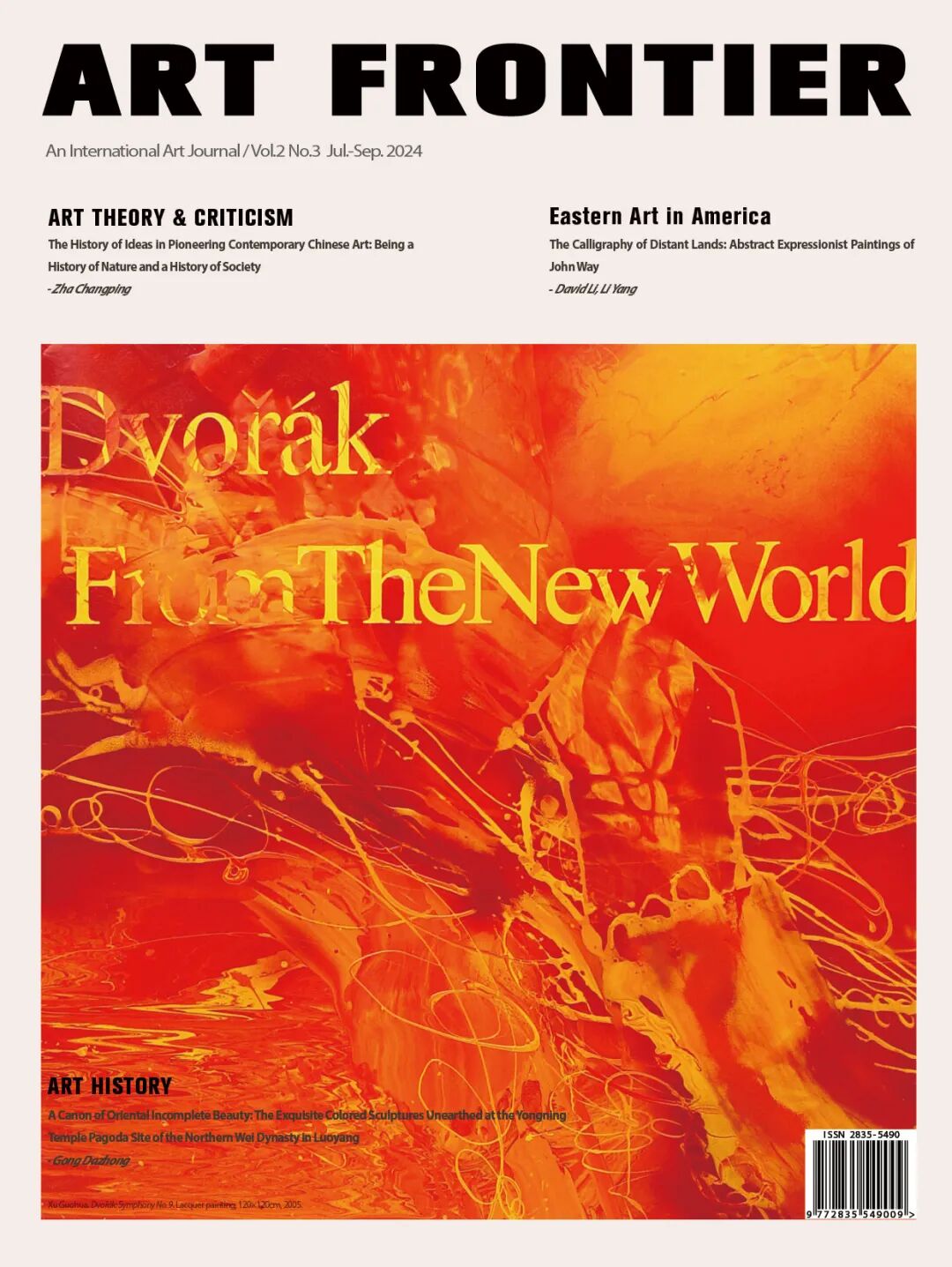
The Calligraphy of Distant Lands: Abstract Expressionist Paintings of John Way
DOI:
https://doi.org/10.64212/WEZR9665Keywords:
Abstract Expressionism, Morphological Expressionism, Asian American, literati, calligraphy, John WayAbstract
American Abstract Expressionist painting successfully shifted the center of contemporary art from Paris to New York in the mid-20th century. This achievement was not only due to the growing international influence of the United States’ power, but also to its inclusive and humanistic values. John Way, originally trained in traditional Chinese literati education as a seal carving artist and calligrapher, boldly transitioned into the realm of Abstract Expressionist painting. He conducted a series of freehand abstract experiments from the perspective of calligraphy. His practice, in many respects, differs entirely from the American artists’ appropriation of Eastern traditional forms. This not only enriched the expressive dimensions of American Abstract Expressionism but can also be seen, from the perspective of a pioneer of Abstract Xieyi Expressionism, as a contemporary interpretation of the literati painting concept.